Yoga Retreats: How to Choose, Book, and Prepare for Your First (or Next) Retreat
The first time I walked into a yoga shala at 5:45am, I thought I’d made a terrible mistake. I was in Rishikesh, India. The room was freezing, the floor tiles were ice-cold, and the smell of strong incense at dawn was giving me a headache. But that £380 week changed my life.
I didn’t book my first yoga retreat from a place of spiritual readiness. I booked it because in March 2018, I had a panic attack during a project review at my financial services firm in London. I couldn’t answer a basic question about whether I wanted a glass of water, and that seemed like a sign. I booked the Rishikesh trip on impulse at 11pm that same night.
Since then, I’ve attended 14 retreats across 9 countries, spending between $380 and $4,200 per week. I started this site because I got tired of reading reviews written by writers who’d been comped free stays, or platforms that rank retreats based on the 10% to 25% affiliate commissions they pay. At YogaRetreatAdvisor, we do not accept featured placement fees. If I recommend a retreat, it is because I would tell my best friend to book it.
What is a yoga retreat (and what it is not)
A yoga retreat is a structured program — typically 3 to 14 days — where you practice yoga, meditate, and follow a curated schedule in a dedicated setting. It is not just a holiday with one optional class. A proper retreat includes daily structured practice (often two sessions), meals designed around the program, and on-site accommodation.
I’ve learned that the teacher matters infinitely more than the accommodation. A brilliant teacher in basic accommodation beats a mediocre teacher in a luxury villa every single time. My highest-rated retreat in Rishikesh had basic dormitory rooms and extraordinary instructors. By contrast, my second retreat in Ubud, Bali ($1,200 for ten days) looked stunning in photos, but the schedule was built around photogenic Instagram moments. The sunrise session was moved when the light wasn’t right, and the cacao ceremony was reshuffled for a photographer. I felt like a prop in someone else’s content strategy.
Most retreats fall into one of these core categories:
| Retreat Type | Typical Duration | Typical Price Range | Best For |
|---|---|---|---|
| Beginner Retreat | 3-5 days | $300-$1,400 | First-timers who want to test the waters |
| Luxury Retreat | 5-7 days | $2,000-$4,000+ | Comfort, high teacher credentials, and spa settings |
| Women-Only Retreat | 5-10 days | $800-$2,500 | Removing social self-consciousness and going deeper |
| Silent / Meditation | 7-14 days | $400-$1,500 (or donation) | Digital detox and removing social performance anxiety |
| Wellness / Ayurveda | 7-10 days | $780-$2,500 | Holistic physical reset and stress recovery |
The 7 most popular yoga retreat destinations
Where you go determines most of your budget. A week-long retreat in Rishikesh costs a fraction of an equivalent program in California. Here are the real benchmarks from our database, based on full board (accommodation, three meals a day, and all scheduled sessions).
1. Bali, Indonesia
Weekly pricing: $600–$900 (Budget) | $1,000–$1,800 (Mid-range) | $1,800–$2,800 (Premium) | $3,000+ (Luxury)
Ubud is the spiritual center, Canggu is the surf-and-yoga hub, and Uluwatu offers clifftop luxury. However, Bali commands a significant price premium driven by aesthetics rather than teaching quality. Equivalent or better yoga instruction is available in India or Portugal at 30% to 50% lower cost. If you want the Bali aesthetic, the food, and the holiday feel, the premium is worth paying. Just don’t pay it expecting superior yoga teaching.
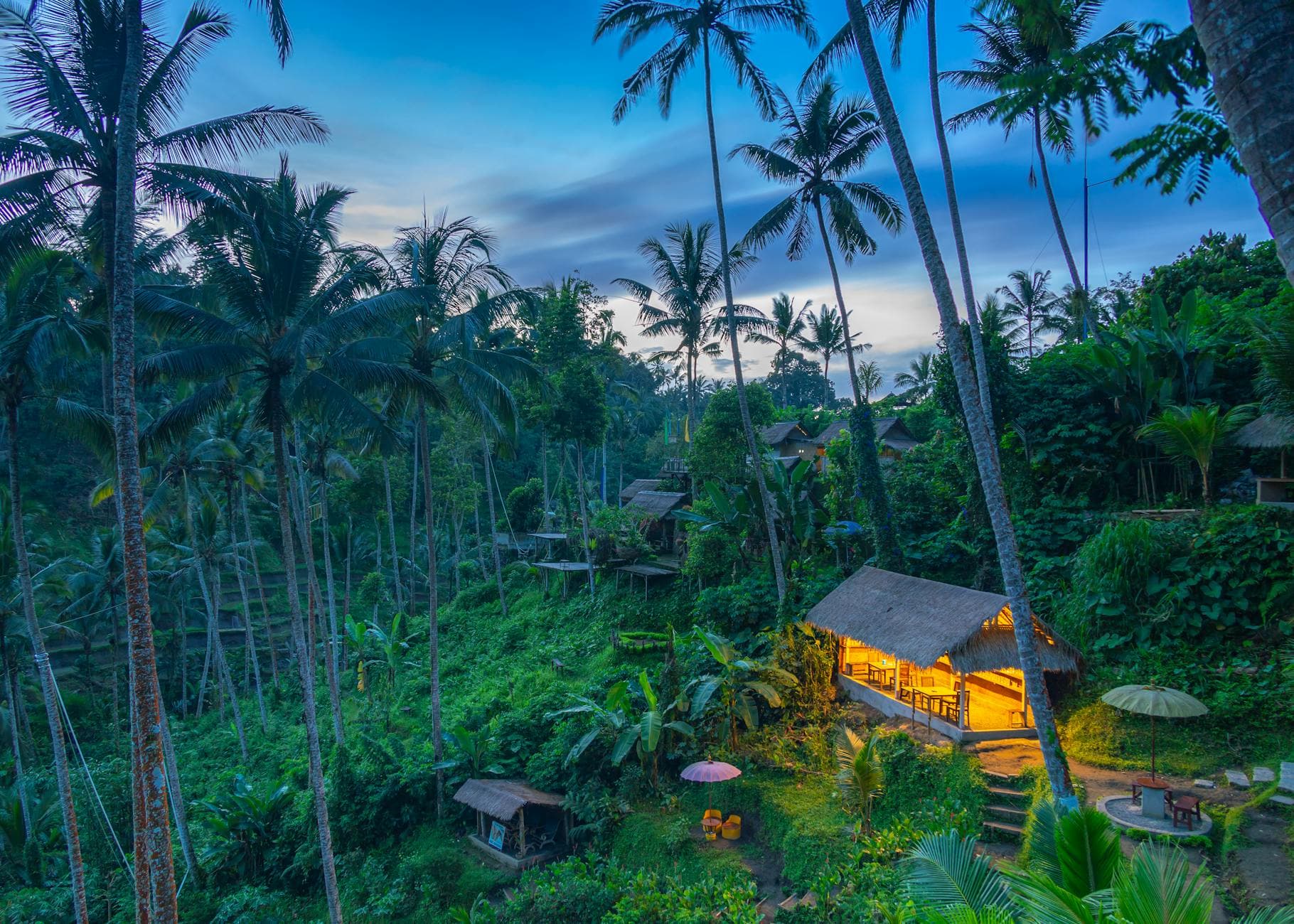
A traditional retreat center in Ubud, Bali, surrounded by tropical forest. Photo by Sergey Guk / Pexels.
2. Costa Rica
Weekly pricing: $700–$1,100 (Budget) | $1,200–$1,800 (Mid-range) | $1,900–$2,800 (Premium) | $3,200+ (Luxury)
Centered around Nosara and Santa Teresa. Retreats here lean toward eco-lodges, surfing, and jungle immersion. It is a fantastic option for US-based travelers looking to avoid long-haul flights, but expect to pay higher baseline prices than in Asia.
3. India (Rishikesh and Kerala)
Weekly pricing: $300–$600 (Budget) | $650–$1,100 (Mid-range) | $1,200–$2,000 (Premium) | $2,500+ (Luxury)
Rishikesh is the spiritual home of yoga. It offers the best teaching quality in the world at the lowest cost. My first Rishikesh retreat cost me $380 for 7 days, full board. Kerala specializes in highly structured Ayurvedic wellness retreats which are physically demanding but transformative. The tradeoff here is simpler accommodation and long travel times.
4. Thailand
Weekly pricing: $600–$900 (Budget) | $950–$1,600 (Mid-range) | $1,700–$2,600 (Premium) | $3,000+ (Luxury)
From meditation in Chiang Mai to beachside programs in Koh Samui and Koh Phangan, Thailand is an excellent middle ground. It offers Bali-level comfort with pricing that is slightly more accessible.
5. Mexico
Weekly pricing: $700–$1,100 (Budget) | $1,200–$1,800 (Mid-range) | $1,900–$2,800 (Premium) | $3,200+ (Luxury)
Tulum and Sayulita are the major destinations. Mexico is incredibly accessible for North Americans and offers wonderful food, cenote ceremonies, and yin yoga programs. Oaxaca is a particularly underrated and affordable destination.
6. Europe (Portugal, Spain, Italy)
Weekly pricing: $800–$1,200 (Budget) | $1,300–$2,100 (Mid-range) | $2,200–$3,500 (Premium) | $4,000+ (Luxury)
Portugal (Algarve and Sintra) offers the best value in Europe. Spain and Italy host premium and luxury retreats in historic country houses. I paid $4,200 for a luxury week in Tuscany — it was flawless, but as a rule, expensive retreats are only worth it if the price itself is emotionally neutral for you. If spending that money makes you anxious, the anxiety will undo every benefit of the yoga.
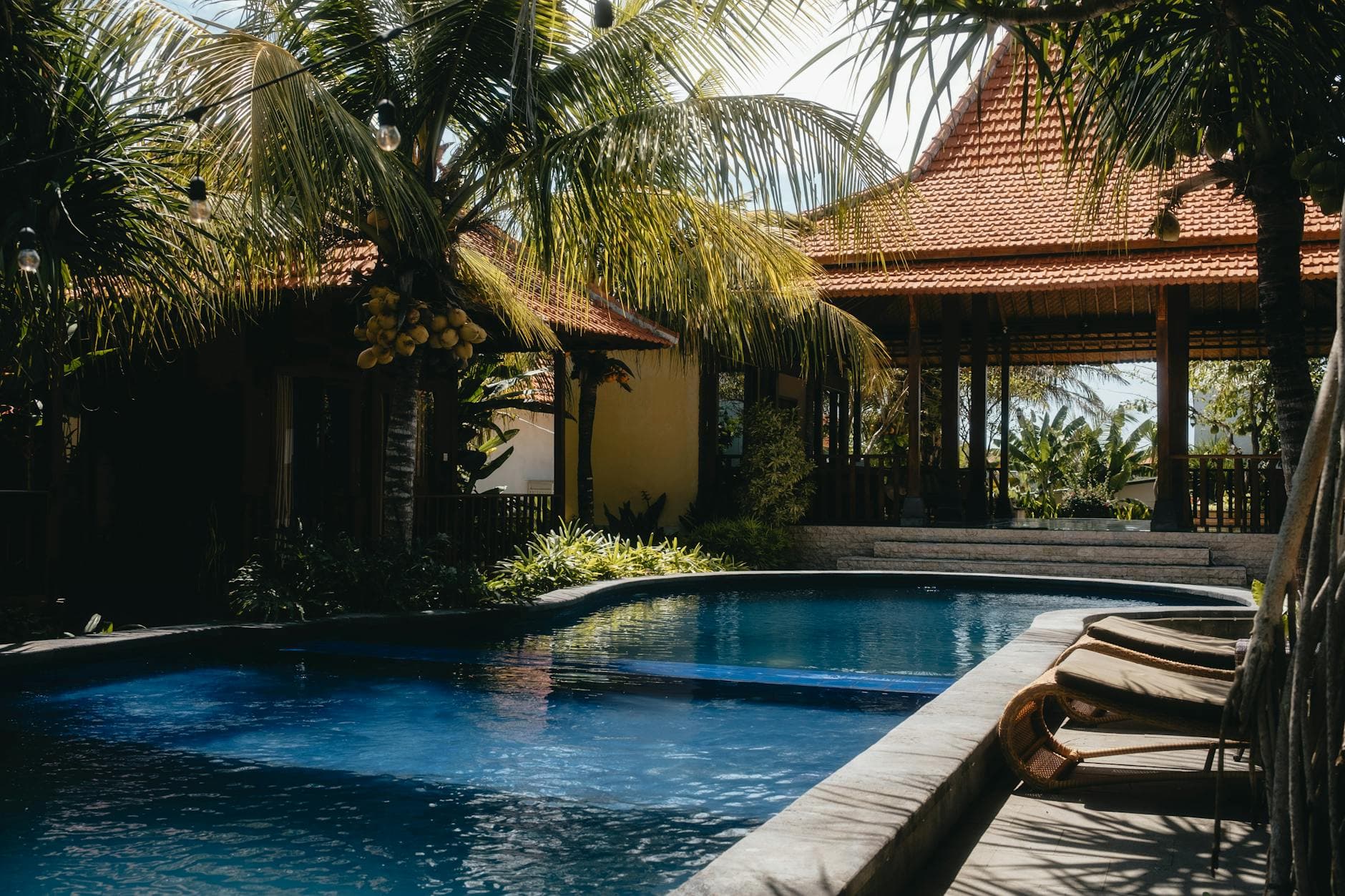
Luxury retreat centers often feature beautiful pools and dedicated spa facilities. Photo by Lukas Faust / Pexels.
7. United States (Sedona and Colorado)
Weekly pricing: $900–$1,400 (Budget) | $1,500–$2,200 (Mid-range) | $2,300–$3,500 (Premium) | $4,000+ (Luxury)
Sedona, Arizona is famous for vortex meditation and hot yoga, while the Colorado Rockies offer altitude yoga and hiking. These are fantastic "gateway retreats" for skeptics because they feel like active holidays rather than high-intensity spiritual programs.
How to choose the right yoga retreat
Before you book, ask yourself one thing: what do I actually need right now? Rest? Challenge? Community? The answer changes everything. Once you know that, use these four pillars to evaluate any program:
- Teaching quality: Check the lead teacher's credentials. Are they certified? How many years have they taught? Look for details in reviews.
- Accommodation: Decide if you can handle shared rooms or if you need a private space. Private rooms typically add $150 to $400 per week.
- Programming: Look at the daily schedule. Is it packed, or is there time to read and rest?
- Organisation: How does the retreat handle logistics? A retreat can have a brilliant teacher but chaotic organisation, which is common in beach destinations. You need to know which trade-off you can tolerate.
I also strongly recommend starting short. The standard 7-day retreat is actually too long for most first-timers. A 4 to 5-day retreat is the optimal entry point. It is long enough to disconnect, but short enough that if you struggle, you aren't stuck in an expensive regret.
If you need help matching these factors, take our 60-second Retreat Matcher Quiz to get personalized recommendations based on our vetted database.
What to expect: daily schedules, meals, and rooms
Nobody warns you that the 5:30am bell will be literal — not a gentle chime, but an actual bell rung by someone with genuine conviction. A typical day on a mid-range retreat follows a rhythmic schedule:
| Time | Activity | What to Expect |
|---|---|---|
| 6:00 - 6:30 AM | Morning meditation or breathwork | Silent and focused |
| 6:30 - 8:30 AM | Active yoga practice | Rigorous vinyasa or hatha session |
| 8:30 - 9:30 AM | Breakfast | Fresh vegetarian meals |
| 10:00 - 12:30 PM | Free time or workshop | Massage, walking, or reading |
| 12:30 - 1:30 PM | Lunch | Usually the largest meal of the day |
| 1:30 - 4:30 PM | Free time | Relaxing by the pool or exploring local villages |
| 4:30 - 6:00 PM | Gentle yoga session | Yin, restorative, or yoga nidra |
| 6:30 - 7:30 PM | Dinner | Light, healthy plant-based food |
Meals: Vegetarian or vegan is the default. If you have severe allergies or complex dietary requirements, confirm that the kitchen can handle them before booking.
Rooms: Shared rooms (dorm-style or twin) account for the budget end. If you are traveling solo (solo travelers make up 60% to 65% of bookings), a shared room is a great way to meet people. If you need absolute quiet, pay the premium for a private room.
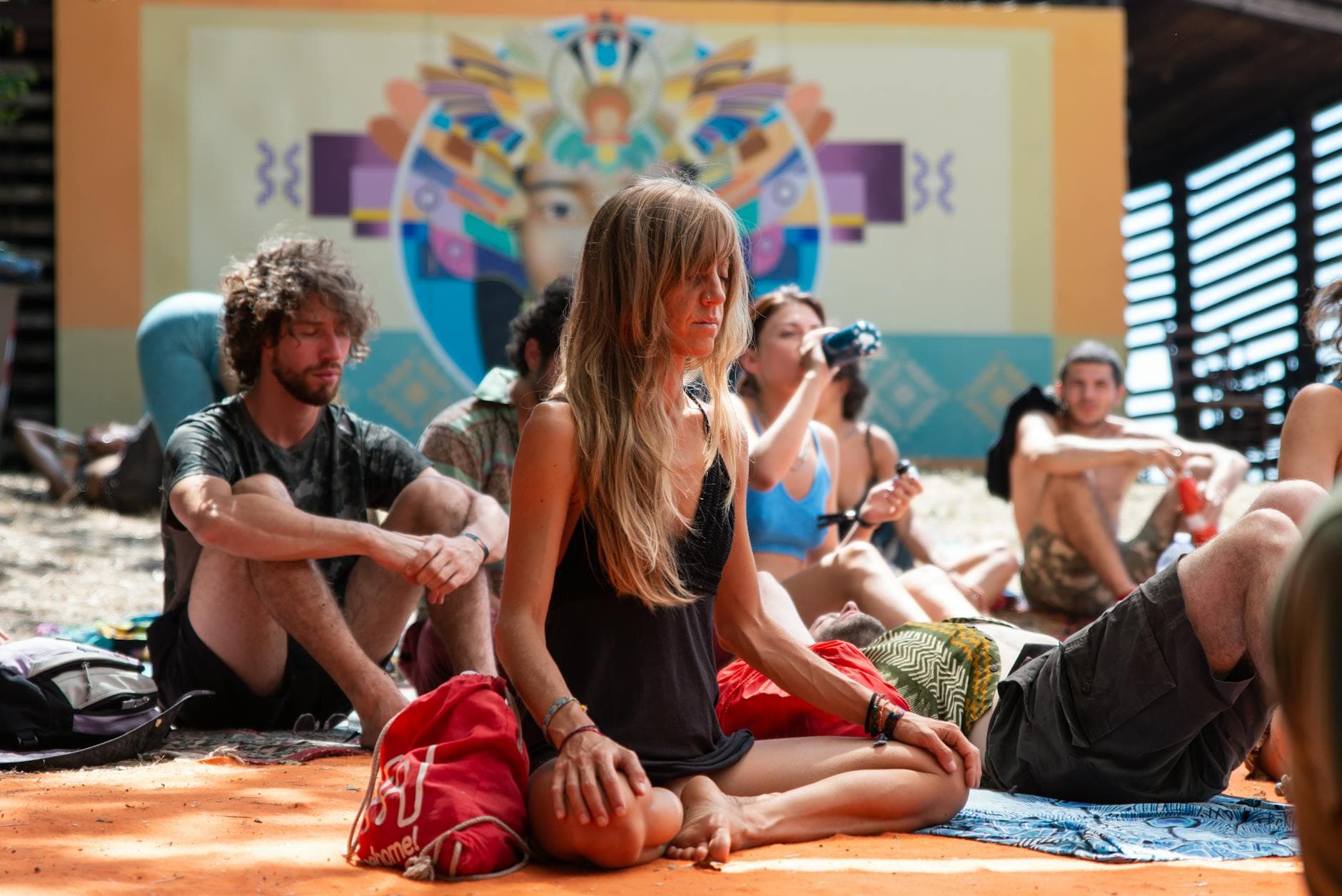
Outdoor meditation session at a summer wellness retreat. Photo by Thomas Benedetti / Pexels.
Yoga retreat pricing: what you actually pay
The headline price of a retreat rarely tells the whole story. To build a realistic budget, you must factor in the extras. Flights, airport transfers, travel insurance, and tips can easily add $1,000 to a trip.
Here is what is usually included and what you will need to pay extra for:
- Included: Accommodation, daily yoga classes, 2-3 meals a day, and use of yoga mats and props.
- Extra: Flights, airport transfers (can be $50-$150 each way), travel insurance, spa treatments, excursions, and tips for the local staff.
What to pack for your retreat
Pack light. Most retreat centers are incredibly casual. You will spend 80% of your time in yoga clothing or swimwear.
- Yoga gear: 3-4 sets of yoga clothes, a travel yoga mat (if you prefer your own), and a reusable water bottle.
- Layers: A warm sweater or shawl for early morning meditation and evening sessions.
- Footwear: Slip-on shoes or sandals (you will be taking them off constantly) and a pair of comfortable walking shoes.
- Mindfulness tools: A physical journal and a pen. Leave your laptop at home. My first instinct at my first silent retreat was to check if there was a Slack equivalent for communicating. There was not, and that was the point.
Three booking mistakes that cost you money
1. Booking based on photos alone
Instagram-perfect and genuinely nourishing are not the same thing. Look past the infinity pools and check the credentials of the teachers. If the website doesn't disclose who is teaching, that is a major red flag.
2. Ignoring the cancellation policy
Most retreats require a non-refundable deposit. A typical cancellation window for a full refund is 30 to 60 days before the start date. Read the terms carefully and buy travel insurance that covers trip cancellation.
3. Not checking the teacher-to-student ratio
A teacher-to-participant ratio worse than 1:20 is a red flag. You won’t get individual attention or adjustments, and the sessions will feel like a busy public class rather than a retreat.

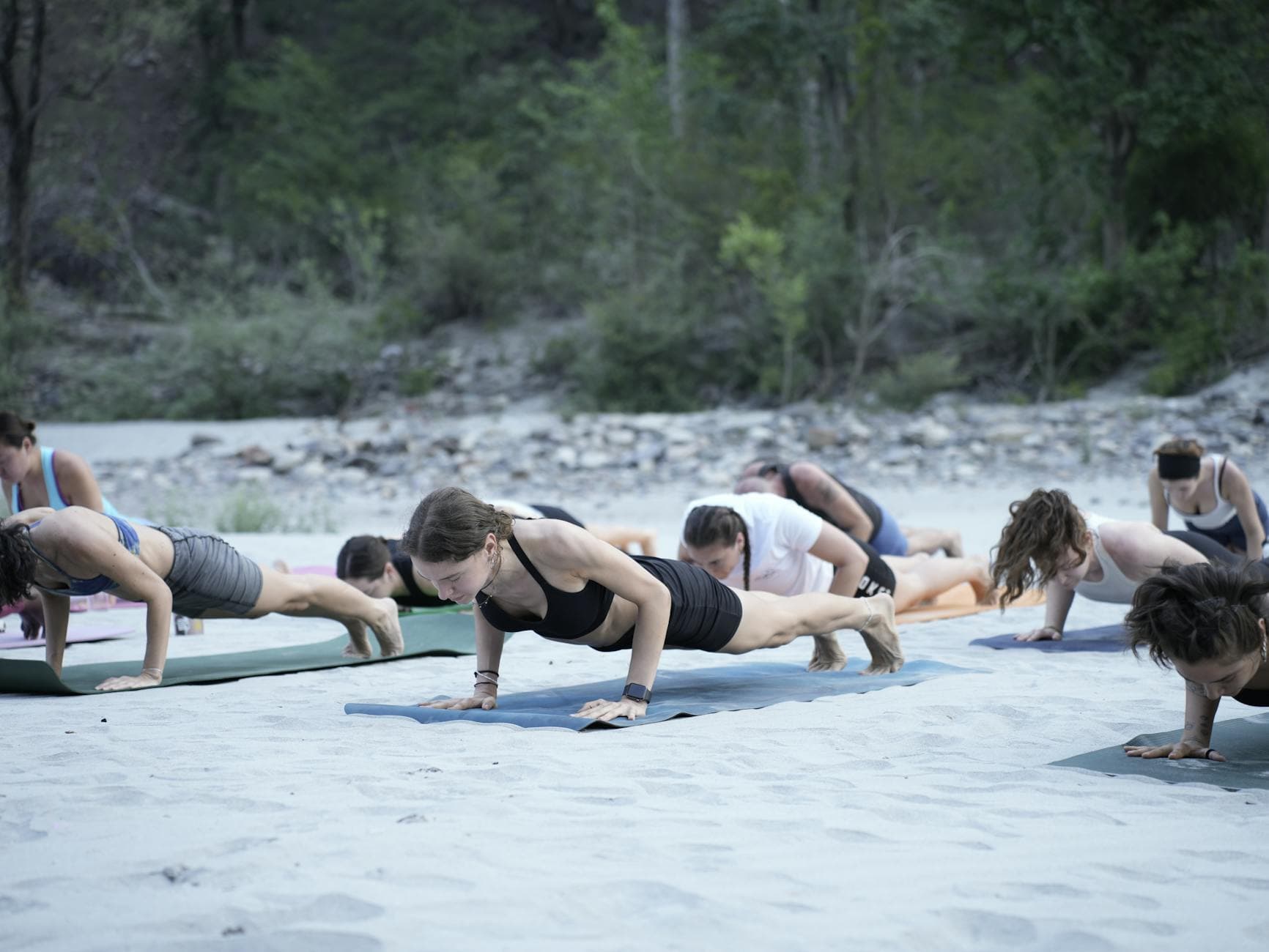
Yoga practice in nature. Photo by Lucas Pezeta / Pexels.
When a yoga retreat is the wrong choice
A yoga retreat is not a cure-all, and pretending it is would be dishonest. Skip the retreat if:
- You just want a vacation: If you want to drink cocktails by the pool and sleep in, book a regular resort. It will be cheaper, more flexible, and you won't feel guilty for skipping the 6:00am practice.
- You are dealing with acute trauma or mental health issues: A yoga retreat is not therapy. Silent retreats (Vipassana) can be intense and are not appropriate for anyone with untreated depression or anxiety disorders without professional guidance.
- Your budget is under $500 total including travel: Don't stretch yourself financially to book a retreat. The financial stress will undo the benefits. Consider a local weekend workshop instead.
How to start planning
If you're ready to take the next step, here is how to proceed:
- Take our Retreat Matcher Quiz to filter options by your goals, level, and budget.
- Browse our verified retreats catalog to compare prices and check teacher credentials.
- Read our destination guides starting with yoga retreats in Bali or Costa Rica yoga retreats.